What it is
Instead of one advertorial serving every archetype, run 3–4 advertorials each optimized for a specific buyer avatar. Every ad creative is matched to the LP whose first 100 words mirror that ad's hook.
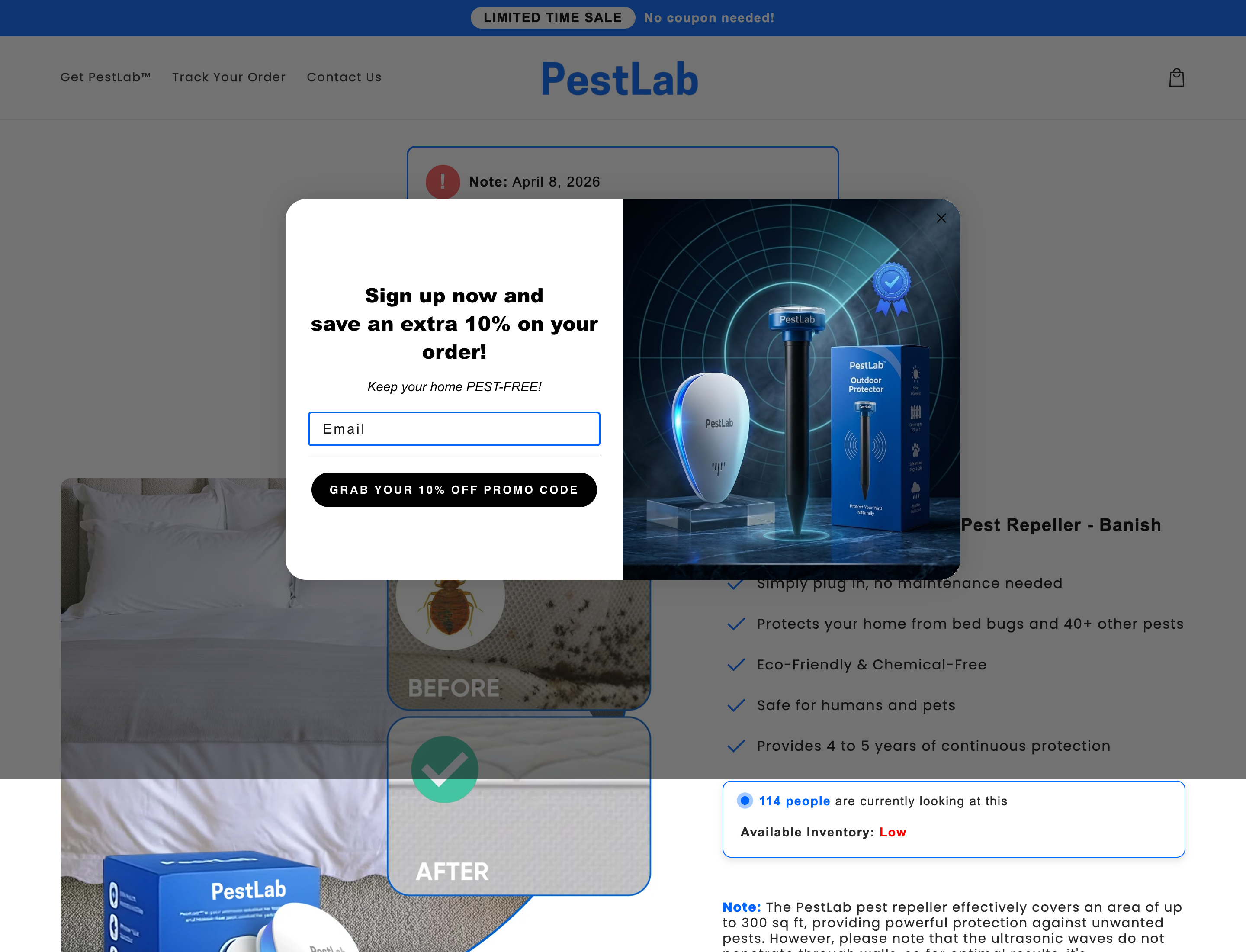
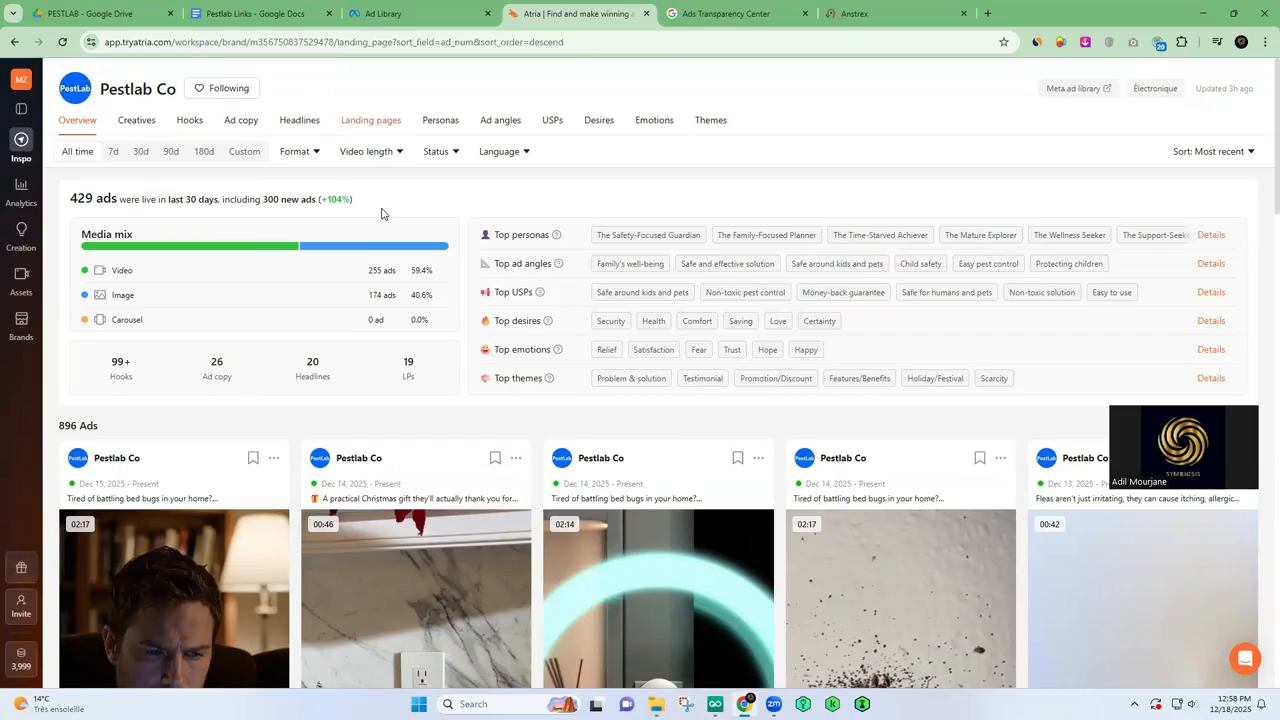
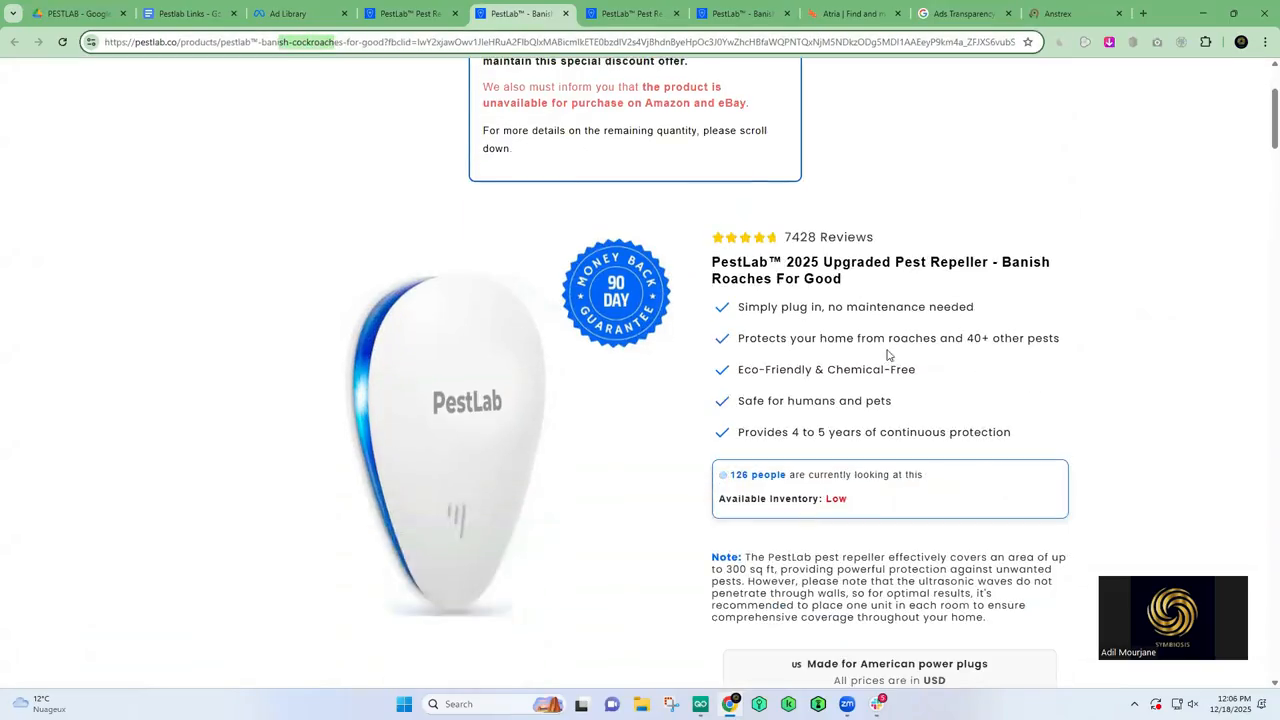
- PestLab does this with pests (bed bugs / fleas / cockroaches).
- BugMD does it with separate sub-branded products per pest.
- BBCo Provitalize does it with conditions (hip pain / GLP-1 rebound / menopause) across separate domains.
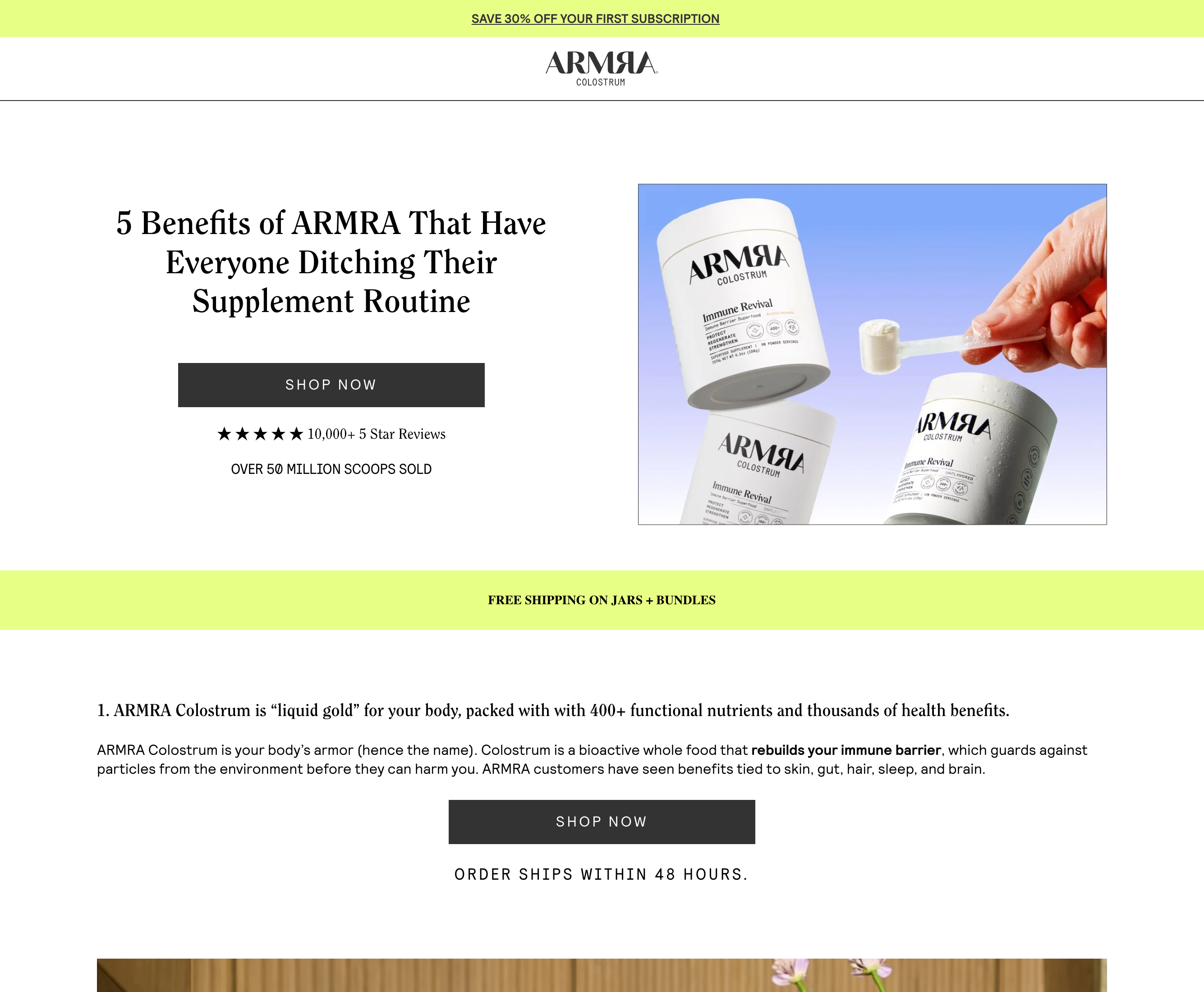
- Armra does it with benefits (general / bloating / hair / founder story) — all on one domain.
Why this fits TerraShell specifically
Your existing advertorial implicitly tries to serve four distinct avatars through its testimonials:
- Jennifer M. — Buffalo mom, blackout, freezing kids
- David M. — Denver dad, stranded on highway
- James R. — safety specialist, 18-year credentials
- Vehicle-kit owner (mentioned in passing)
Which means it's partly serving all of them but fully serving none of them. The buyer lands expecting to read about their situation and gets a generic blanket of stories. Disaster preparedness has unusually strong natural segmentation — disasters are regional, psychographics are distinct, moms aren't preppers aren't van-lifers.
Proposed TerraShell segment map
| # | Avatar | Traffic target | Advertorial hook | Primary pain cited | Dominant testimonial | Matched ad angle |
|---|---|---|---|---|---|---|
| A | "Storm Mom" (current) | ~40% | "A Disaster Response Expert Spent 20 Years Watching Families Make the Same Deadly Mistake" | Kids shivering during blackout | Jennifer M. Buffalo | UGC mom ads, "night the power went out" videos |
| B | "Stranded Driver" Dad | ~25% | "The $20 Item This Highway Patrol Captain Keeps Behind Every Seat" | Car breakdown in a snowstorm | David M. Denver | Truck/highway UGC, winter driving clips |
| C | "Wildfire / Hurricane Evacuee" | ~20% | "When She Got the Evacuation Alert, She Had 11 Minutes to Grab What Mattered" | Forced evacuation, no time to plan | New testimonial — CA or FL family | Fire/flood footage, evacuation alert sound |
| D | "Practical Prepper" | ~15% | "The 22-Year Disaster Response Coordinator's Personal Go-Bag — Revealed" | FEMA baseline, grid-down scenarios | James R. + Marcus Webb face-to-cam | Webb direct address, gear-breakdown format |
Armra variant vs. BBCo variant: which to run first
| Variant | What it is | Overhead | When |
|---|---|---|---|
| Armra variant (recommended) | Single domain, different slugs: /article, /article-driver, /article-evacuation, /article-prepper |
Low — one CMS, one analytics property | Start here |
| BBCo variant | Stealth sub-brand domains for the most divergent segments (e.g. terrashell-forprepper.com) |
High — separate domains, separate retargeting pixels, separate ad accounts | Only if one segment's retargeting must be isolated |
Here's Armra's version live on one domain — click to open the full scraped page and see the "general benefits" framing you'd mirror for TerraShell Variant A:
Implementation spec
- Template the advertorial. Identify the 6 sections that stay constant (byline bar, Webb's credential block, TerraShell reveal, product spec, guarantee, footer) vs. the 4 that change per avatar (headline/deck, opening scene, featured testimonials, closing CTA language).
- Match ad creative 1:1. Every ad set points to exactly one advertorial. The ad hook should paraphrase the advertorial headline.
- Budget allocation: 50% initial to Advertorial A (winner baseline), 15–20% each to B/C/D. Shift over 2–3 weeks based on CPA.
- Measurement gate: need at least 200 orders per variant before calling winners. That's roughly $50–$100k ad spend on the slower variants — build the budget plan up front.
- New testimonial sourcing: Variants C and D require real testimonials you don't have yet. Start sourcing via post-purchase email to existing buyers in CA/FL/TX and prepper-community customers.
Expected lift (honest ranges)
Watch-outs
Evidence — scraped pages and video clips
Click any thumbnail to open the above-the-fold preview plus the full-page scroll. Video thumbnails open an embedded player that jumps to the exact moment.
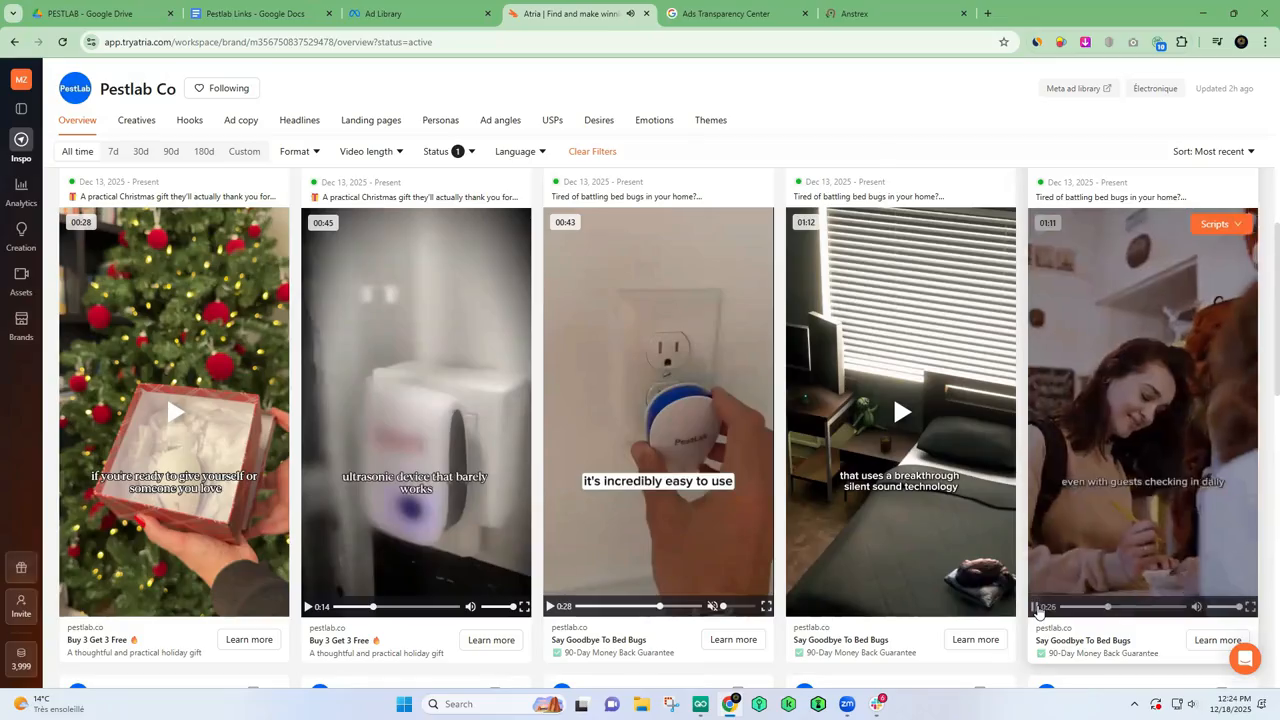
PestLab — same product, two pain-point LPs
PestLab runs the same ultrasonic repeller against multiple pests. Their winner LP (bed bugs) is 17 chunks of pain-specific copy; their PDP is the shared conversion page. Compare the two to see how the advertorial does the segmentation while the PDP stays neutral.

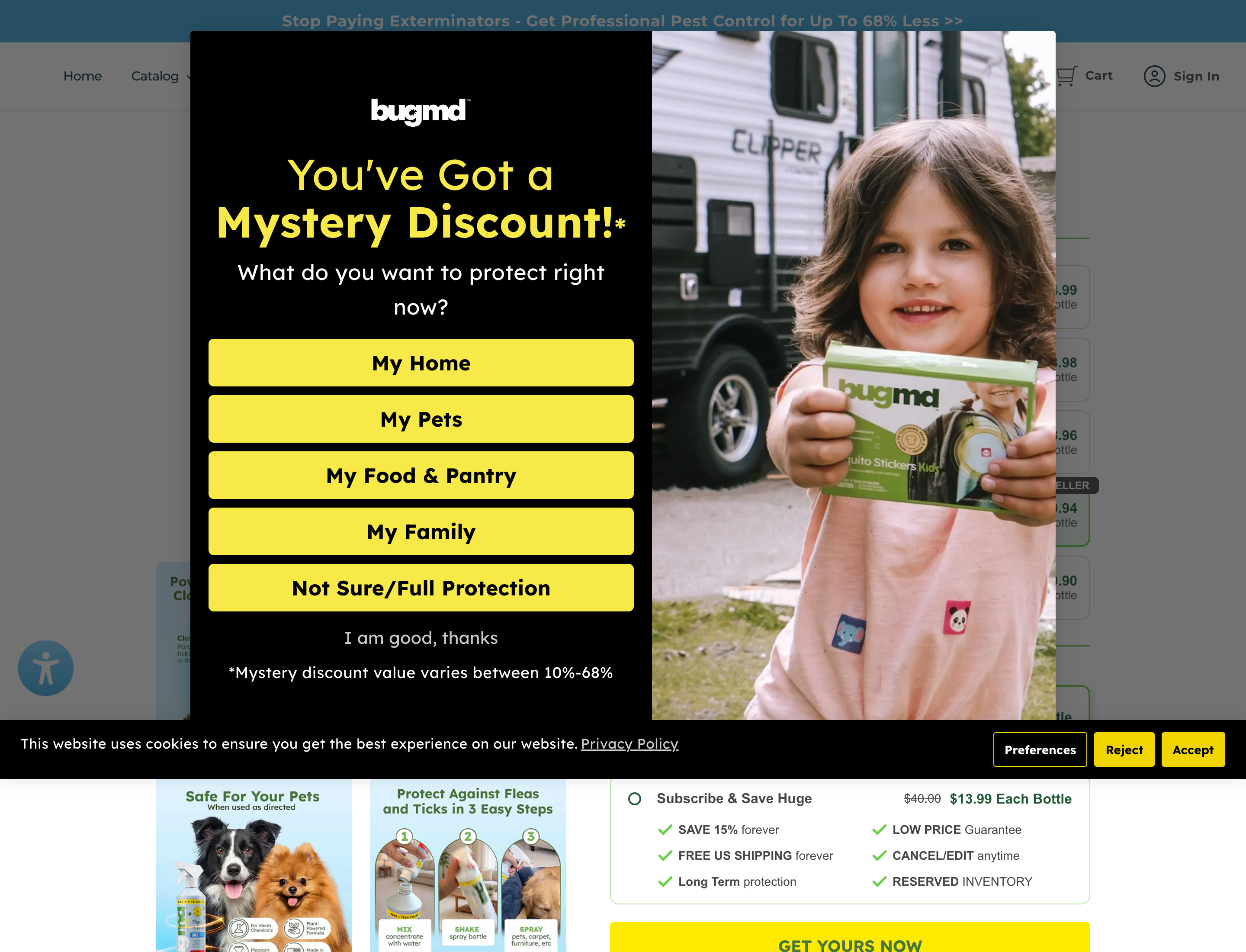
BugMD — variant that uses separate sub-products per pest
BugMD takes segmentation one step further than PestLab: they split the product, not just the LP. If you ever spin off "TerraShell Home" vs. "TerraShell Vehicle" as named SKUs, this is your roadmap.

BBCo Provitalize — extreme variant: separate domains per condition
Same supplement sold under different domains (thebbco.com for menopause/hip, rejuveen.com for GLP-1) because the avatars are too distant psychographically to share one brand. Your PDP and OTO infrastructure can stay shared; just the front end splits. This is what TerraShell's BBCo-variant would look like if you ever go that far.

Armra — lowest-overhead variant (same domain, 4 slugs)
The starting point we recommend for TerraShell. All 4 benefit-segmented LPs live on tryarmra.com; the product and the pattern never change, only the opening arc. Tanner walks through each variant and gives critique:
09:01
/
21:18
/
35:22.
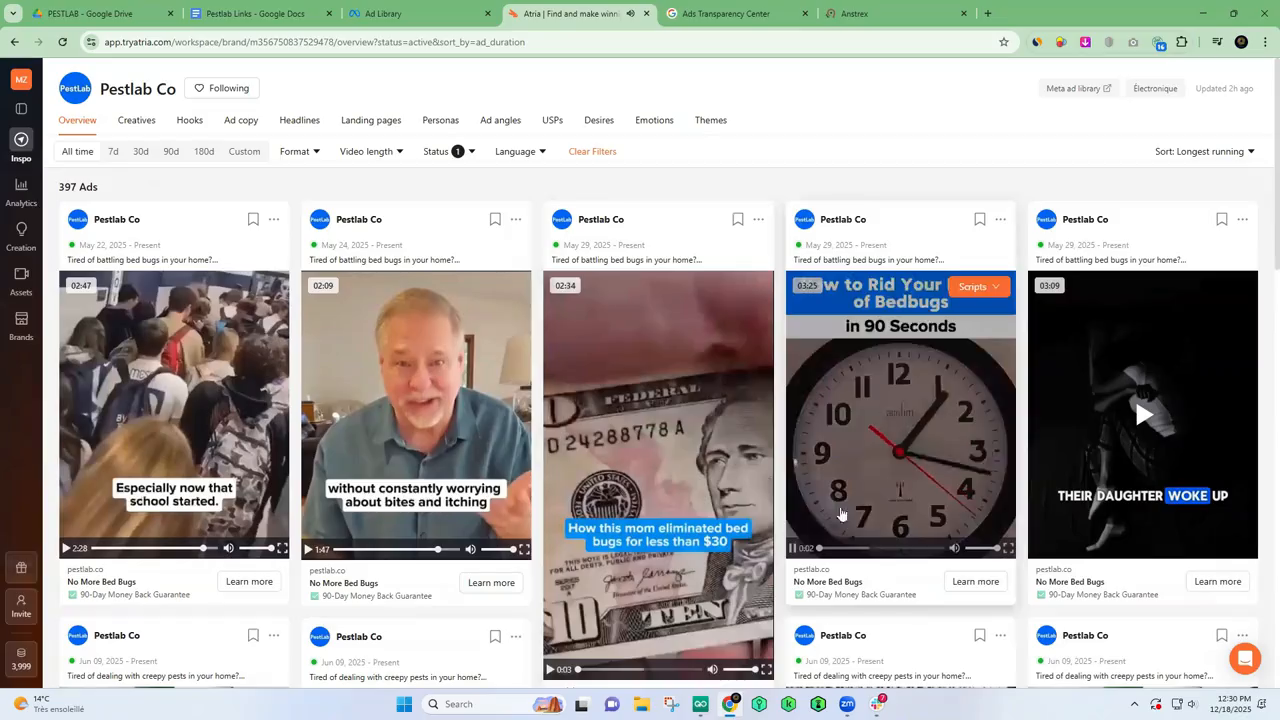
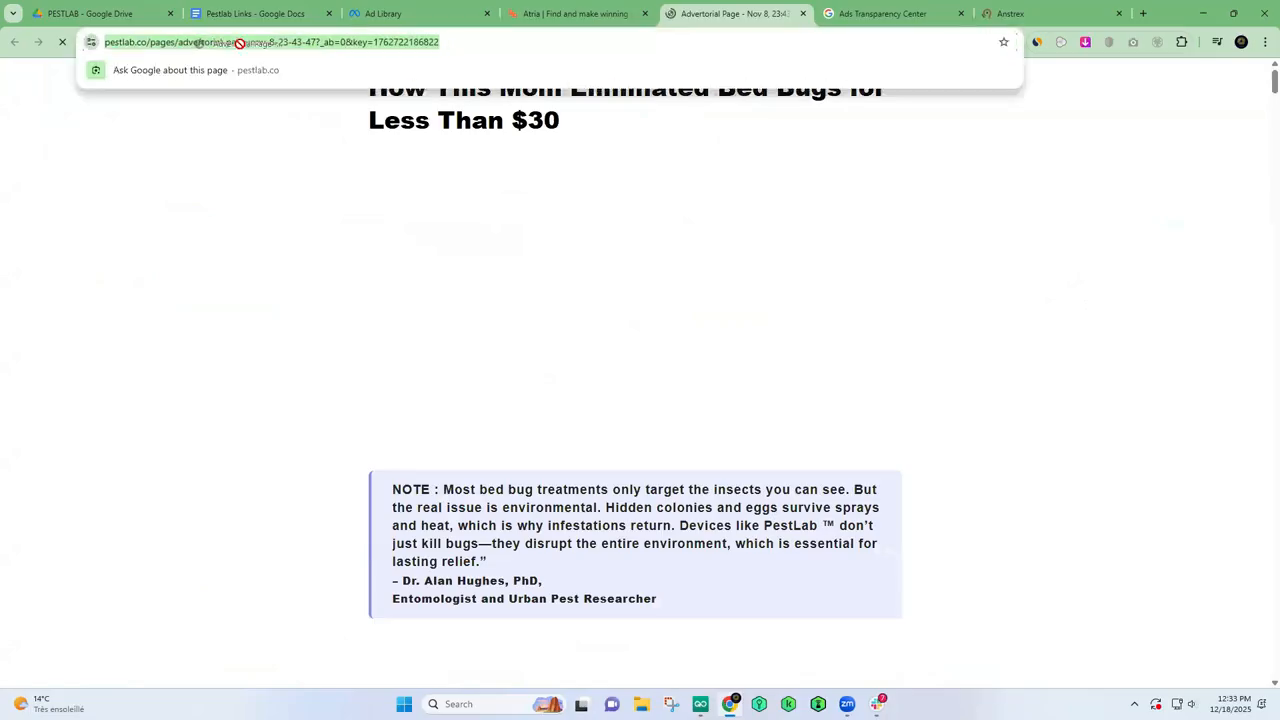
PestLab ad creative → advertorial message match
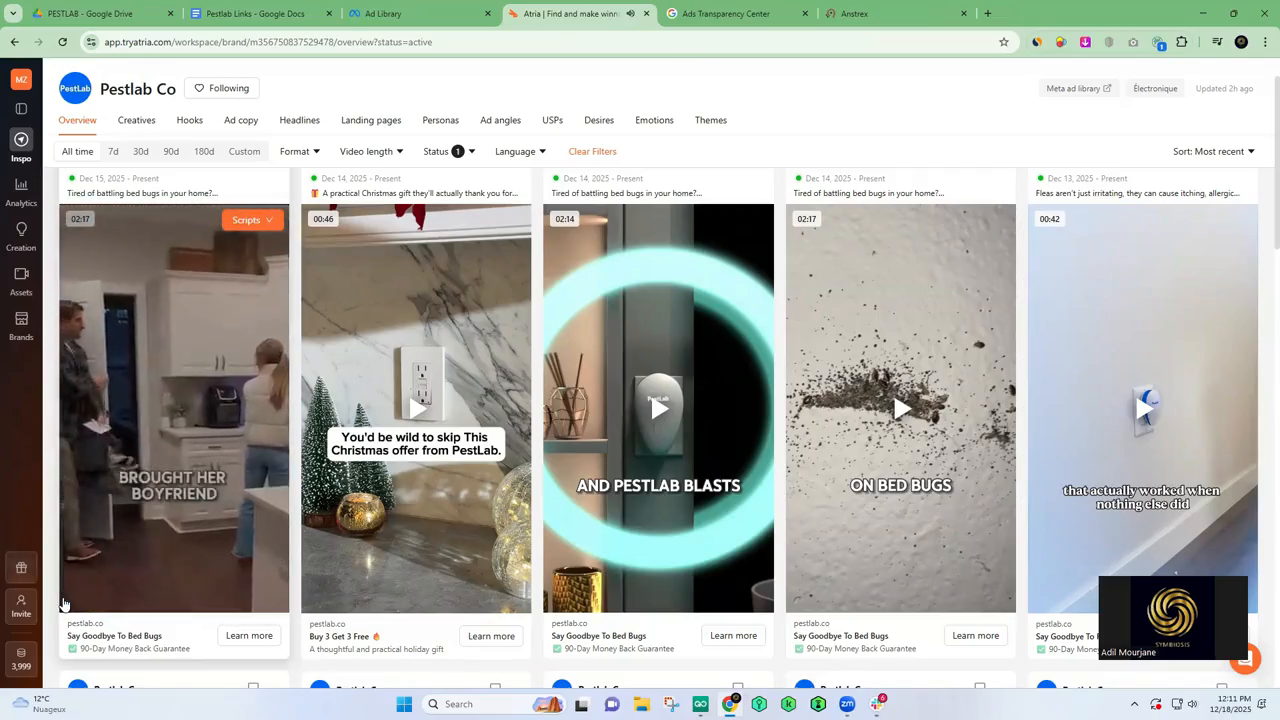
The final piece: the ad-to-advertorial handoff. The mom-avatar ad headline ("How this mom eliminated bed bugs for less than $30") is the SAME phrasing as the mom-avatar advertorial headline. That's the rule for TerraShell: every ad creative points to the advertorial whose first 100 words mirror the ad hook.
Reference brands for this pattern in our library
| Brand | Axis of segmentation | Domain strategy | What TerraShell can learn |
|---|---|---|---|
| PestLab | Pest type (bed bugs / fleas / cockroaches / holiday) | Single domain, different slugs | Closest analog — also one physical product serving multiple pain points. Traffic distribution data is public. |
| BugMD | Pest type — plus separate sub-branded products | Single domain, multiple sub-products | If you ever split TerraShell into "TerraShell Home" vs. "TerraShell Vehicle" SKUs, this is the roadmap. |
| BBCo Provitalize | Health condition (hip pain / GLP-1 rebound / menopause) | Separate domains (thebbco.com, rejuveen.com) | Shows what "aggressive segmentation" looks like at the extreme — for when segments are too psychographically distant to share one domain. |
| Armra | Benefit (general / bloating / hair / founder-story) | Single domain, 4 LPs | Lowest-overhead version of the pattern. Best starting point for TerraShell. |
Next moves
- Commit to the Armra variant (one domain, four slugs) — don't over-engineer with sub-brand domains on day one
- Template the existing advertorial into constants vs. variables
- Start testimonial sourcing for Variants C (evacuee) and D (prepper) — email existing buyers to self-identify
- Write Variant B (Stranded Driver) first — David M. Denver is already in your current copy, easiest to extract and expand
- Build a per-variant dashboard: adv hits, CTR-to-PDP, PDP conv, per-variant CPA
- Allocate 15–20% of ad spend to each new variant for 2–3 weeks; shift based on CPA